Global

3 out of 4 cans are recycled in Romania, as the DRS system enters a new stage of circular economy maturity

3 out of 4 cans are recycled in Romania, as the DRS system enters a new stage of circular economy maturity 4016 6016 adminEirini

RetuRO data shows a strong alignment between collection, sorting and recycling, with the aluminium drink can emerging as a key indicator of circularity. 

From consumers returning packaging to the collection and recycling systems that allow materials to re-enter the economy, every link contributes to the functioning of the circular economy. 

In Romania, the moment reflects a stage of maturity for this system: in 2025, 75% of the aluminium cans placed on the market were recycled, according to official RetuRO data.

The result, achieved in the second full calendar year of operation of the Deposit Return System (DRS), indicates the system’s maturation and marks the transition from a phase dominated by collection to one characterized by functional industrial recycling with measurable economic impact. 

Romania’s progress, driven largely by the expansion of Deposit Return Systems, reflects a broader European trend. According to the latest report published by Metal Packaging Europe and European Aluminium, the recycling rate for aluminium drink cans in Europe reached over 76% in 2023, the highest level recorded so far. The report shows that both the volumes of packaging placed on the market and the quantities recycled have increased year after year, while the recovered material generated estimated savings of 5.7 million tonnes of CO₂ equivalent, confirming aluminium’s role in the European circular economy. 

At the national level, current data indicate an accelerated evolution and Romania’s rapid alignment with European trends, as collection infrastructure continues to expand and industrial recycling flows become more consolidated. Before the introduction of the Deposit Return System (DRS), the recycling rate for aluminium cans in Romania stood at around 35%, significantly below the levels recorded in other European countries. 

“In the circular economy, real performance indicators always appear with a certain time lag. European reports on packaging recycling are typically published around two years after the reference year, as the data must be validated through multiple industrial and institutional sources, including extended producer responsibility schemes, deposit return systems and statistical reporting to Eurostat. This process reflects the complexity of the circular value chain, where performance is measured across the entire journey of the material from return and sorting to recycling and the reintegration of aluminium into the production of new drink cans,” said David Van Heuverswyn, Global Director of Every Can Counts. 

Circular economy still poorly understood: only 1 in 2 Romanians associates it with repeated recycling of the same material 

The 2025 results reflect Romania’s readiness to move towards the “second phase” of the circular economy: a stage in which collection mechanisms are supported by consistent industrial performance and the material’s ability to remain in use through repeated cycles. In the case of aluminium, this is possible because the material can be recycled repeatedly without losing quality, including in closed-loop recycling – from can to can. Before DRS, cans were less likely to be suitable for true can-to-can recycling because they were more exposed to contamination from mixed waste streams. Within a DRS, however, drink cans are collected separately and remain much cleaner, which means that most, if not all, can be recycled into new cans, enabling a more efficient closed-loop circular system. 

“Every Can Counts runs communication programmes about the infinite recyclability of aluminium drink cans in more than 20 countries, and we observe the same evolution in markets where deposit return systems are introduced. In the first years, the focus is on collection and infrastructure building, while later performance is assessed through the system’s ability to transform collected material into recycled material. From this perspective, Romania’s results show a rapid alignment with European trends and confirm aluminium’s potential as a key material for the circular economy,” said David Van Heuverswyn, Global Director of Every Can Counts. 

Beyond the performance of recycling into the same type of packaging, aluminium also holds significant economic value within the circular chain. Recovered material can be quickly reintegrated into production, and its properties remain unchanged regardless of the number of recycling cycles. In addition, producing an aluminium can from recycled material uses up to 95% less energy than primary production, meaning recycling contributes simultaneously to industrial efficiency and emissions reduction.  

Industrial data is also supported by a visible change in public behaviour. According to the Global Recycling Habits and Attitudes 2025 study, conducted by Made with Insight for Every Can Counts, most Romanians say they actively participate in the Deposit Return System and consider themselves personally responsible for recycling. 

At the same time, the research highlights an important gap between behaviour and understanding of the circular economy concept: 53% of respondents associate circularity with the repeated recycling of the same material into similar products, indicating that the act of returning packaging is better understood than the economic value of recycled materials. 

This gap highlights the need for clearer information about what happens to materials after collection. In the case of aluminium, for example, material recovered from a drink can can return to the shelf as a new can again and again, without loss of quality. Programmes such as Every Can Counts focus precisely on this information component, explaining the material loop and the role of recycling in the circular economy through campaigns and activations carried out in public spaces, events and urban environments. 

“The next challenge is no longer convincing people to return packaging, but explaining what happens to the material after collection. Circularity, beyond a responsible gesture, means economic value preserved over time and the ability of a package to re-enter the economy through repeated recycling. In this context, aluminium becomes a criterion for choice when consumers have options, because it is one of the few materials that can be recycled indefinitely without losing quality,” added David Van Heuverswyn. 

In this context, aluminium can become a tangible benchmark for the transition from environmental policies to measurable economic performance, with impact on industry, production chains and the economy as a whole. 

Sources:
• Metal Packaging Europe (MPE) and European Aluminium (EA), Aluminium Beverage Can Recycling Results 2023. Read the full press release. 

• Every Can Counts, Global Recycling Habits and Attitudes 2025.  Read the full survey.

• RetuRO SGR, report 2025. Read the full report.

Cada Lata Cuenta: Can recycling takes to the streets at Spain’s most iconic carnivals

Cada Lata Cuenta: Can recycling takes to the streets at Spain’s most iconic carnivals 5022 3347 adminEirini

When the streets of Cádiz and Santa Cruz de Tenerife fill with music, costumes and celebration, sustainability finds its place too. This year, our Spanish chapter Cada Lata Cuenta joined two of Spain’s most iconic carnivals to remind thousands of people that recycling can also be part of the party.        

Through the campaign “Tu Lata al Amarillo”, the programme collaborated with local authorities to encourage responsible drink can recycling during the festivities in Cádiz and Tenerife.

This initiative aims to inspire people to recycle their aluminium cans and turn it into a daily habit. Because small actions, repeated at scale, can create real impact. Recycling aluminium consumes 95% less energy than producing a new can from raw materials.

In Cádiz, additional recycling points were installed at key locations, and our ambassadors promoted can recycling during  popular events, such as the traditional Frito Gaditano.

Meanwhile in Tenerife, Cada Lata Cuenta’s teams moved through the crowds during major carnival parades with the iconic Every Can Counts backpacks, engaging directly with participants and helping them to recycle their cans on the go, and keep the streets cleaner as the celebrations unfolded. 

By bringing recycling into these lively celebrations, Cada Lata Cuenta shows that even during the most festive moments, something as simple as throwing your drink can in the right bin, can make a meaningful environmental impact.

Watch the highlights:

Record-breaking Mardi Gras Season for Every Can Counts U.S. & Recycle Dat!

Record-breaking Mardi Gras Season for Every Can Counts U.S. & Recycle Dat! 1926 1283 adminEirini

In partnership with Grounds Krewe, Osprey Initiative and other local organizations, the Every Can Counts chapter in the United States recycled a record number of used drink cans – nearly 197,000 cans – at Mardi Gras 2026 in the city of New Orleans as part of the Recycle Dat! initiative.

Mardi Gras generates 2.5 million lbs (~1.13 million kg) of waste in just 10 days of celebrations. Recycle Dat! is a community-wide effort to make this celebration more sustainable by providing convenient recycling options along the parade route.

This year, Recycle Dat! successfully diverted a total of 61,219 pounds (~27,768 kg) of recyclable materials from landfills during the 2026 Carnival season.

6,142 lbs (~2,786 kg) of aluminium, representing roughly 197,000 cans, were collected and sent for recycling to a local scrap yard EMR Metal Recycling, and the value of the scrap aluminium will be donated back to Grounds Krewe, so we can continue to fund future recycling efforts at Mardi Gras!

This total effort also included the recovery of 34,741 lbs (~15,758 kg) of glass, 1,691 lbs (~767 kg) of plastic and 18,646 lbs (~8,457 kg) of Mardi Gras beads and throws.

Building on prior success, this year’s programme introduced new strategies and expanded geographically, demonstrating the growing demand for sustainable Mardi Gras practices across the region.

To make recycling more visible and engaging for parade-goers, the local artist Erika Moore created the #PixelCan mural at Recycle World, an Every Can Counts installation showcasing the infinite recyclability of aluminium.

“RecycleDAT! 2026 showed what’s possible when strong partnerships and community participation come together,” said Brett Davis, Founding Director, Grounds Krewe. “Each year, we’re seeing more people embrace the opportunity to celebrate Mardi Gras in a way that’s both fun and responsible. The continued growth of this programme reflects a real shift in how our community approaches sustainability during Carnival and beyond.”

“Every Can Counts U.S. was proud to sponsor Recycle Dat! for a third consecutive year. Our goal was to recycle as many used beverage cans along the Mardi Gras parade routes, as well as in New Orleans bars and restaurants, and at Recycle World, where we exhibited an aluminium PixelCan art display,” said Scott Breen, President of Can Manufacturers Institute, lead organizer of Every Can Counts U.S.

“When recycled, 97% of aluminum beverage cans become new cans, and on average, aluminum beverage cans go from recycling bin to a new can in less than 60 days. Best of all, the cans collected this year will be sold to a local scrap yard – EMR Metal Recycling, with the revenue generated donated back to Grounds Krewe, supporting future recycling efforts in New Orleans.”

Aluminium Beverage Can Recycling Reaches a New Record

Aluminium Beverage Can Recycling Reaches a New Record 3456 2304 adminEirini

76.3% Recycling Rate Achieved Across Europe as Momentum Towards 100% Circularity Builds

The latest report by Metal Packaging Europe (MPE) and European Aluminium (EA) shows that the overall recycling rate for aluminium beverage cans in the European Union, United Kingdom, Switzerland, Norway and Iceland reached 76.3% in 2023.

The records for the year show that both volumes placed on the market and recycling tonnages increased year on year, by 4% and 7% respectively, meaning that record volumes of aluminium recycled from cans were fed back into Europe’s circular economy. The recycled tonnage represents a total Greenhouse Gas (GHG) emissions saving of 5.7 million tonnes of CO2eq (equivalent to the annual amount of GHG produced by a European city of more than half a million inhabitants like Lyon or Gdańsk.) [1]

The continued increase in recycled aluminium volume reflects a general uplift in recycling performance, accentuated in countries with Deposit Return Schemes (DRS) for aluminium beverage cans. For example, in the reporting year (2023) Malta introduced a DRS which sparked a rapid increase in aluminium beverage can recycling from 50 to 80%. Equally significantly, both Latvia and the Slovak Republic experienced year-on-year double-digit growth in recycling rates in 2023 following their implementation of a DRS in 2022. (Latvia: from 60% to 74% in 2023(+14% ), Slovak Republic: from 58% to 91% in 2023(+33% )).

This report highlights the integral role of the aluminium sector in contributing simultaneously to the EU’s ambitious climate agenda and circular economy objectives. Indeed the reported increase in recycling rates is a significant driver of emissions reductions, as recycling aluminium requires 95% less energy than primary production. With the successful implementation of DRS and an export duty on aluminium scrap, Europe will be able to advance on closed loop can-to-can recycling.

Despite this important progression, MPE and EA remain committed to increasing recycling rates at the European level, and supporting improved national collection infrastructure through Deposit Return Systems. In doing so both EU Member States and industry continue working towards 100% Circularity by 2050.

Director of the Packaging Group at European Aluminium, Andy Doran, commented, “Year on year the evidence builds that well designed Deposit Return Schemes offer consumers the additional incentive to return high value aluminium beverage cans for high quality recycling, at the same time creating the opportunity for closed product loop, circular economy solutions within Europe. Full Member State implementation is still needed of the Packaging & Packaging Waste Regulation National requirements for DRS, so that all EU citizens can now experience this simple and effective collection solution”.

“We are encouraged by the latest achievements and believe the industry is on the right long-term path. Aluminium is a permanent material and a circular resource whose inherent properties do not change, regardless of the number of times it goes through a recycling process. By 2023, 12 Member States had implemented deposit return schemes (DRS) for aluminium beverage cans, with more Member States following. This growing momentum clearly demonstrates that the pathway towards fully circular, can-to-can recycling for aluminium beverage cans is taking shape across Europe.” said Krassimira Kazashka, CEO of Metal Packaging Europe.

Consumers Back DRS, Yet Awareness of Aluminium’s Infinite Recyclability Lags

The positive momentum is confirmed by the global Every Can Counts consumer survey conducted across 16 countries (including 13 European markets), which shows that 71% of consumers support Deposit Return Schemes, while financial incentives and convenience are the strongest drivers for increased recycling participation.

At the same time, awareness of aluminium’s infinite recyclability remains an opportunity, with only 17%  of consumers rating drink cans as the most recyclable packaging option. 

By combining consumer insight, education and engagement, Every Can Counts is helping turn aluminium’s circularity into public understanding and everyday action, supporting the sector’s pathway towards full can-to-can recycling and 100% circularity by 2050.

2023 Aluminium Drink Can Recycling Rates by Country

[1] If a yearly GHG emission of 9,2 tonnes is assumed per EU citizen as used in the Product Environmental Footprint methodology, see Normalisation method and data for Environmental Footprints – Deliverable 2 of the AA Environmental Footprint and Material Efficiency Support for Product Policy (No. 70307/2012/ENV.C.1/635340)

Sources: 

• Metal Packaging Europe (MPE) and European Aluminium (EA), Aluminium Beverage Can Recycling Results 2023. Read the full press release. 

• Every Can Counts, Global Recycling Habits and Attitudes 2025.  Read the full survey.

Immerse Yourself in the Power of Aluminium Recycling: The Infinity Room Returns to Catalyst Science Discovery Centre

Immerse Yourself in the Power of Aluminium Recycling: The Infinity Room Returns to Catalyst Science Discovery Centre 4000 2668 adminEirini

The “Infinity Room” installation, created by our UK chapter, is back at Catalyst Science Discovery Centre and Museum in Widnes. This time, it’s here for a whole year – ready to spark even more recycling magic!

Step inside a giant drink can and discover the endless possibilities of aluminium recycling. Mirrors and floating cans bring the magic to life – reminding everyone, young and old, why recycling matters.

Following its debut launch at the centre back in 2023, the Infinity Room is back at Catalyst for 2026. Still immersive, still eye-catching, and ready to inspire the next generation of recyclers.

Step Inside The Infinity Room

As you step inside the giant drink can, you’re surrounded by mirrors and floating aluminium cans, creating the illusion of infinite reflections. It’s playful, immersive, and the perfect spot for a photo. But it’s also packed with purpose.

Built with 1,500 recycled aluminium cans and 25 square metres of mirrors, the Infinity Room brings recycling to life in a way that’s unforgettable for visitors of all ages.

Why Drink Can Recycling Really Does Make A Difference

Aluminium is one of the most valuable materials in your recycling bin. It can be recycled again and again without losing quality.

Recycling drink cans is quick and efficient —your empty can could be back on the shelf in just 60 days. Recycling aluminium also saves 95% of the energy needed to make new aluminium from scratch. That’s a win for you and the planet.

Click here to learn more about the drink can recycling process.

Chris Latham-Warde, Programme Manager for Every Can Counts UK, said:

“We’re so pleased to be bringing the Infinity Room back to Catalyst after its popular first visit. The installation is designed to capture attention and spark conversations about aluminium’s value and why recycling matters.

“Aluminium can be reused again and again and every empty can has the potential to be back on the shop shelves in as little as 60 days. We hope visitors to Catalyst and our installation leave feeling motivated to keep that cycle going.”

Linking Science, Sustainability and the Curriculum

Catalyst is using the Infinity Room to show how chemistry connects to our climate, with hands-on displays and activities inspired by the national curriculum.

For schools, it’s a unique way to bring sustainability and science together. For families, it’s a fun way to see how everyday choices – like recycling a drink can – can make a real difference.

Meryl Jameson, Marketing Manager at Catalyst Science Discovery Centre and Museum, said:

“We’re excited to welcome the Infinity Room back to Catalyst following the enthusiasm it received during its first run. It’s a brilliant way to engage visitors with an important message, while offering a fun and immersive experience for families and young people.

“At Catalyst, we’re passionate about helping people explore science and understand the impact we can all have on the world around us. Working with Every Can Counts helps bring sustainability to life in a creative, hands-on way – and we hope it encourages visitors to make sure every drink can they use is recycled.”

Planning Your Visit to the Infinity Room at Catalyst

The Infinity Room is included with your standard admission to Catalyst. No extra cost, just extra inspiration.

Click here for more info about admission prices.

Catalyst Opening Times:

  • Closed Mondays
  • Tuesday & Wednesday: 10am–2pm
  • Thursday to Sunday: 10am–4pm

Find the Infinity Room in the Interactive Gallery on the ground floor.

Planning a family day out, a school trip, or just want to see recycling in a whole new way? The Infinity Room is a must-see experience. And a powerful reminder that every can really does count.

Every Can Counts U.S. and Open Water Debut  Recycling-Themed Cage at Intuit Dome’s  Los Angeles Clippers Plaza

Every Can Counts U.S. and Open Water Debut  Recycling-Themed Cage at Intuit Dome’s  Los Angeles Clippers Plaza 4733 2231 adminEirini

The Clippers-themed recycling cage is the first NBA activation for Every Can Counts U.S. and is supported by Open Water

The Every Can Counts chapter in the United States has launched a new activation at the Intuit Dome in Inglewood, California, in partnership with Open Water.

The recycling activation features more than 1,200 empty Open Water aluminium beverage cans inside a Clippers-themed recycling cage. This aluminium-fabricated cage was built in California and highlights the value of recycling used drink cans at away-from-home events.

“Intuit Dome is redefining what sustainability can look like in professional sports venues, and we couldn’t be more excited to partner with Every Can Counts to celebrate these efforts,” says Niki Mazaroli, Director of Sustainability and Community Engagement at Open Water. “Their leadership shows how world-class entertainment and environmental responsibility can go hand-in-hand—and we’re grateful that Open Water can play a part in eliminating plastic waste and keeping aluminium in the circular economy.”

Aluminium is infinitely recyclable. And aluminium drink cans are the most sustainable beverage package on virtually every measure. Recycling aluminium cans also helps to save energy and reduce waste.

“We are thrilled to celebrate this new partnership with Open Water by launching a first-of-its-kind recycling cage at Intuit Dome’s Plaza,” says Tim Ebner, Vice President of Marketing and Communications at Can Manufacturers Institute and a lead organizer of the Every Can Counts U.S. chapter.

Photo Credits: Intuit Dome

“The Every Can Counts recycling cage will inspire people to recycle by highlighting the sustainability success of aluminium drink cans. Used beverage cans are easily recyclable, moving on average from the recycling bin to newly formed cans in less than 60 days on average, making them a truly circular solution. 97% of recycled aluminium drink cans in the United States go on to become new cans.”

Intuit Dome was designed and built to exceed the most stringent environmental standards and has taken a comprehensive approach to sustainability.

Open Water is available to purchase at all Frictionless Markets for Clippers home games, concerts, and live events, as well as in the arena’s premium spaces, eliminating the need for plastic bottles.

The Every Can Counts recycling cage debuted in the Plaza on Monday, January 12, 2026.

Look for the LA Clippers recycling cage in the plaza, filled with Open Water aluminum cans, before you enter the arena. And remember to recycle your empty cans to keep the cycle going.

Open Water donates 1% of every sale to ocean conservation projects through its Sea Change Grants programme. The company is also a certified B Corp and Women-Owned business (WBENC).

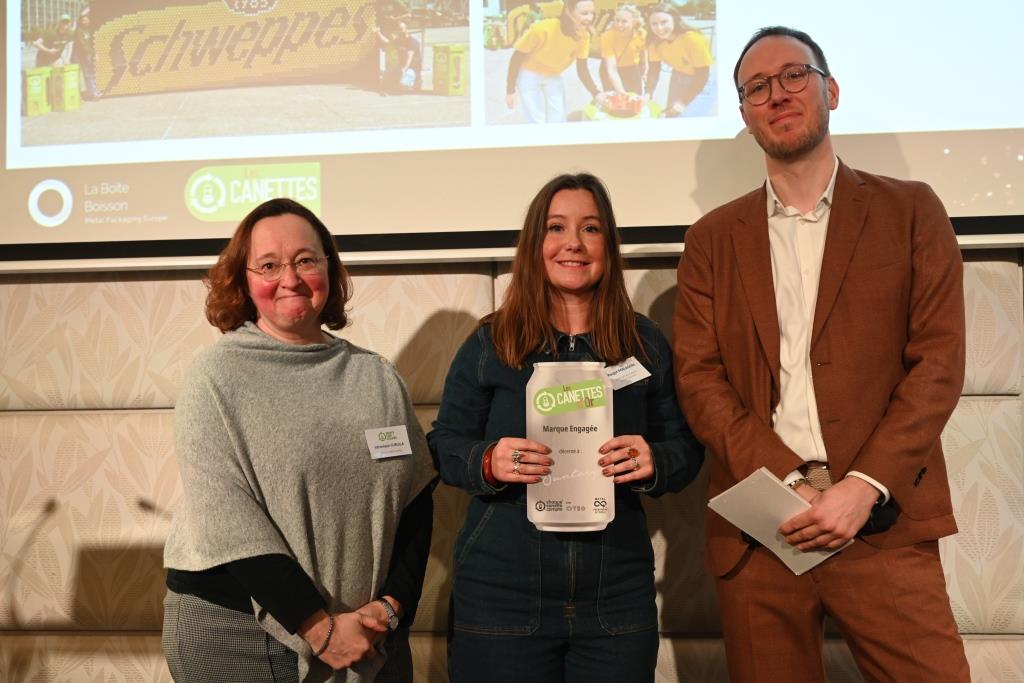
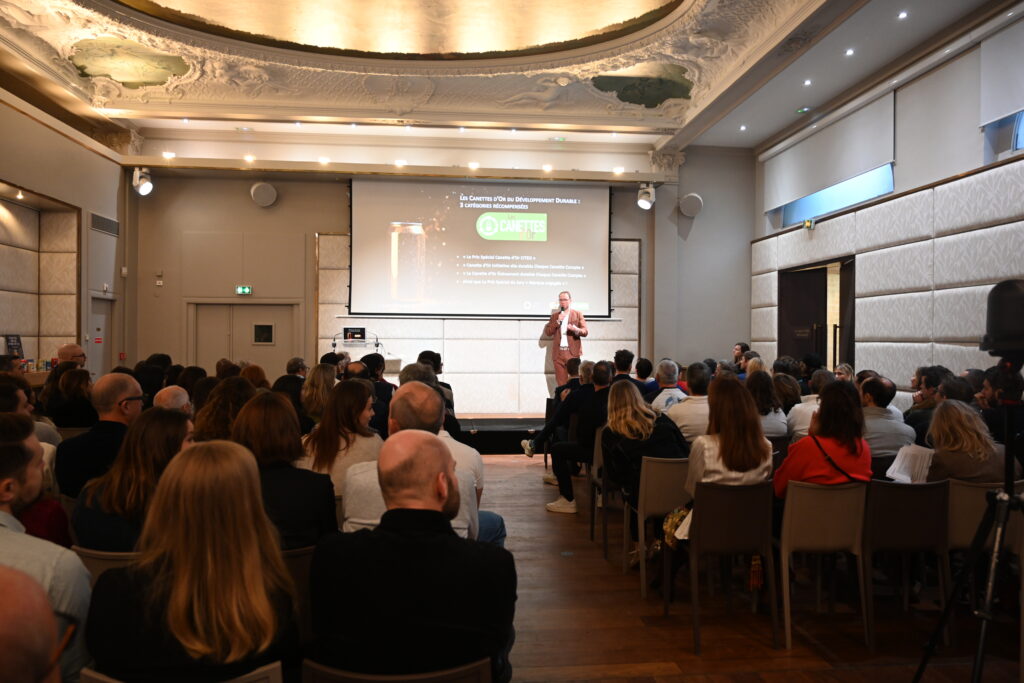
Chaque Canette Compte – The 5th “Canettes d’Or” Awards

Chaque Canette Compte – The 5th “Canettes d’Or” Awards 6982 3580 adminEirini

For the 5th consecutive year, the Every Can Counts French chapter, Chaque Canette Compte, hosted the “Canettes d’Or’ Awards”, attracting record-breaking number of entries. Over 250 new products and initiatives were submitted across 12 categories, showcasing the innovation and sustainability efforts across beverage industry.

The entries were carefully reviewed by a jury of design and marketing experts, professional journalists and representatives from Metal Packaging Europe, alongside specialists from La Boîte Boisson,  CITEO and the ECC team, including the Every Can Counts Global Director David Van Heuverswyn.

This event was an opportunity for Chaque Canette Compte to spotlight the partners and initiatives that have supported the programme’s activities and campaigns to promote drink can recycling over the past two years.

A total of 20 prizes were awarded. The highlights:

-Recycling Ambassador: Brasserie Kronenbourg for their innovative collaboration with Chaque Canette Compte in supermarkets.

-Committed Brand: Tourtel Twist.

-Partners of the Year: the NGOs “Les Connexions” and “ABC Charity Association”.

-Best Initiative: the local collectivity “Sud Rhone Environnement”.

Finally, Chaque Canette Compte’s long-standing partner, Coca-Cola, made a special guest appearance to present the ‘Responsible Event’ trophy to the Olympic Torch Relay, recognizing their large-scale joint action during the Olympic Games.

Global Every Can Counts Survey 2025: Recycling Habits and Attitudes Across 16 Countries

Global Every Can Counts Survey 2025: Recycling Habits and Attitudes Across 16 Countries 1900 560 Matina Zavoudaki

Global Survey: Circularity Enters the Public Vocabulary while Deposit Return Schemes Are Winning Global Support

71% of people worldwide support Deposit Return Schemes (DRS), with trust at record highs — paving the way for circular systems that keep infinitely recyclable materials like drink cans in the loop.

Circularity is becoming part of the public mindset, according to the third wave of the international study commissioned by Every Can Counts, conducted across 16 countries and more than 16,000 participants. Half of respondents associate circular packaging with being recycled back into the same type of product again and again, and only 43% with being reusable. At the same time, 57% define recyclable packaging as “designed for circularity”, showing that the concept resonates with consumers.

“Circularity doesn’t have to be complex,” said David Van Heuverswyn, Global Director of Every Can Counts. “Infinitely recyclable and already widely collected, aluminium cans are proof that truly circular packaging is possible. What’s missing is awareness.”

At the system level, DRS is the public’s chosen path to make circularity real. 71% of people around the world express support for DRS, with trust even higher, as 88% believe containers returned through these systems are effectively recycled. Meanwhile, 87% agree that, to protect the environment, all single-use drink packaging — from drink cans to glass and PET bottles — should be included.

The context is urgent: nine in ten people worldwide see plastic waste as a key environmental issue, on par with climate change. Yet this is not just an environmental sentiment, it’s a behavioural direction. The findings reveal that convenience and incentives are key to influencing change in recycling habits. 71% even support adjusting deposit fees by container size, showing a clear preference for fair, impactful solutions.

Public Mandate Across Borders

In Ireland, Romania, Hungary, and the Netherlands, where DRS is already in place, 90% of people surveyed say they participate in DRS, showing how quickly the habit takes hold. Among non-DRS countries, support ranges from 58% in the USA to 86% in Serbia, with Brazil also high at 85%. In countries preparing legislation, such as Belgium and Greece, majorities back DRS but call for clearer information and simpler processes.

Baby Boomers Convinced, Gen Z Needs Convincing

Support for DRS rises steadily with age: 59% among Gen Z, 67% among Millennials, 74% among Gen X, and 80% among Baby Boomers. This suggests near consensus among older generations, while younger audiences see promise but want education and targeted engagement to build buy-in.

From Policy to Drink Packaging: Bridging the Awareness Gap

The study positions DRS as more than a collection mechanism — a bridge between consumer behaviour and true circularity, while revealing an awareness gap. Only 17% of people identify aluminium drink cans as “the most recyclable” beverage packaging, despite the fact that the can is the most recycled beverage container in the world, with a 71% global recycling rate, compared with 34% for glass and 40% for PET (source: Eunomia Research & Consulting commissioned by IAI*). According to the same analysis, aluminium cans also have a 33% closed-loop recycling rate, the highest among single-use beverage containers.

“As DRS adoption expands, its high-quality, low-contamination collection will further increase aluminium’s recycling performance, keeping valuable material in circulation, enabling more drink cans to be recycled into new ones, and preventing the 29% still lost to landfill each year,” commented Alexandra Williams, Chair of Every Can Counts.

When asked who should be responsible for drink-can recycling, 53% of people see consumers as most responsible. The overall picture, however, is one of shared accountability where progress depends on collaboration among people, industry, and policymakers.

One Truth is Universal: People Recycle More When It Feels Rewarding

Beyond policy and material performance, the survey confirms that experience matters. 71% of respondents say they would recycle more if the process were fun or interactive, highlighting that engagement is the missing piece in waste management systems.

“The data show what we see at Every Can Counts every day: people do care, they just want to feel part of the change and understand why true recycling matters,” added David Van Heuverswyn. Deposit Return Schemes are the start, not the finish, and Every Can Counts is working across 21 countries to keep educating consumers about the remarkable sustainability credentials of the aluminium drink can.”

Global Recycling Habits and Attitudes 2025, commissioned by Every Can Counts. Read the full survey.

*Source: Eunomia Research & Consulting commissioned by IAI. Read the full study.