Press

European Recycling Tour 2021

European Recycling Tour 2021 2560 1706 adminEirini

World Environment Day 2021: Every Can Counts Launches European Recycling Tour

An inspiring ‘on the go’ recycling campaign will run simultaneously in 15 countries and 19 locations across Europe to celebrate outdoor spaces and promote a more circular economy.

On the 5th of June, from lakes and city squares to parks and shopping streets, there will be a sight to behold all over Europe. Small teams with colourful backpacks will be buzzing around on a mission: to encourage people to keep public outdoor spaces clean and recycle their drink cans wherever they are.

Prompted by World Environment Day and a pandemic-induced increase in littering observed all over Europe, this initiative by Every Can Counts is a coordinated creative campaign taking place simultaneously in 15 countries and 19 locations. The backpackers participating in the European Recycling Tour 2021 will be seen in Austria, Czech Republic, France, Greece, Hungary, Ireland, Italy, Montenegro, Netherlands, Poland, Romania, Serbia, Slovenia, Spain, and the United Kingdom.

The first- ever can recycling tour in Europe!

While 2021 marks the first time this backpack campaign will run on a European scale, the concept behind it originates from 2017. What began as a local ‘on the go’ recycling and awareness activation will now serve as a platform to help amplify key messages and encourage small but important behavioural changes.

“Outdoor public spaces provided a much-needed escapism during the pandemic, and now is our turn to help protect them from an impending ‘littering pandemic’, a phenomenon we have sadly witnessed lately on a global scale. But World Environment Day is also a great opportunity to inspire people to put their empties in the right bin and invite them to be part of our vision for a 100% real aluminium drink can recycling. At the same time, the amount of energy saved by recycling (95%) corresponds to an equivalent saving in GHG emissions, making every can we recycle a key enabler for a truly circular economy”, says David Van Heuverswyn, Director of Every Can Counts Europe.

Buzzing backpackers on a mission to inspire and recycle drink cans across Europe

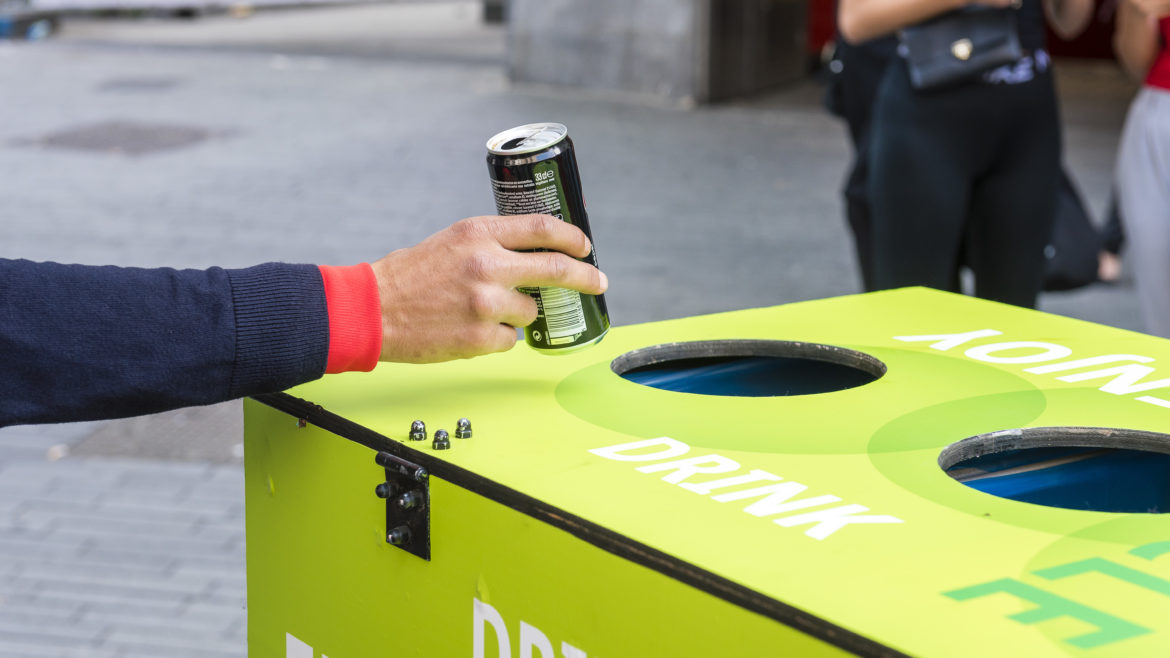
With outdoor public spaces becoming havens for relaxation, exercise, and escape during the pandemic, people have never been more aware of their important function. But when it comes to recycling in general, and “out of home” in particular, more work needs to be done. In a European poll conducted by Every Can Counts in 2020, while more than three-quarters of respondents said they always or often put their drinks packaging in the recycling bin when at home, only 48% recycle in outdoor locations. At the same time, 93% of Europeans would like to see more recycling bins on the streets, in public spaces, parks, beaches, or on trails.

The European Recycling Tour aims to remind people that keeping public outdoor spaces clean is a truly collaborative effort. Small everyday acts, like proper waste disposal, can help us all towards a more sustainable living and a healthier planet. 

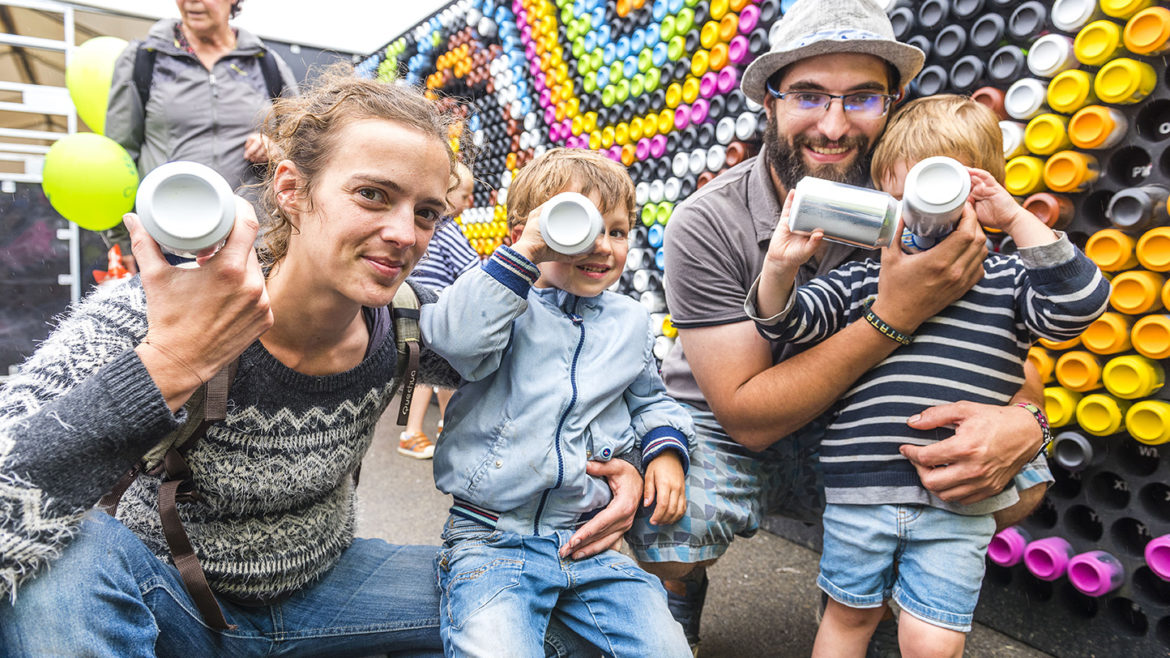
The key message will be communicated playfully through various activities on the day, such as outdoor games, dance acts, and the now Instagram-famous rainbow of cans art installation. Each tour location will celebrate public spaces in a special way, with the backpackers roaming Amsterdam,  Ardèche, Athens, Belgrade, Brno, Bucharest, Budva, Dublin, Genoa, Kotor, Krakow, Ljubljana, Madrid, Manchester, Prague, Siófok, Thessaloniki, Vienna, and Wroclaw.

Always engaging in a socially distant way, they will encourage citizens to keep their surroundings clean and ask them to drop their used drink cans in their backpacks to make sure they will be recycled. People will also be offered to participate in short surveys with prizes and share their own recycling stories on social media channels with #EuropeanRecyclingTour2021.

Europeans Want More Recycling Bins in Public Spaces, Poll Shows

Europeans Want More Recycling Bins in Public Spaces, Poll Shows 2500 1669 JakubCZ

Europeans would like to see more recycling bins when they are out and about, according to a survey performed in 14 European countries by the LUCID polling agency in association with the Every Can Counts initiative that aims to raise awareness about the advantages of recycling aluminium drink cans.

These results come on the heels of news that 86% of people say that it’s more important than ever to recycle. However, it seems that the chief obstacle to higher recycling rates is a lack of infrastructure.

The poll showed that most respondents (93%) would like to see more recycling bins on the streets, in public spaces, parks, beaches, or on trails. That number inches up to 94% when people were asked about large events such as festivals or sporting events. Furthermore, a resounding 90% of people said that these events should only use recyclable packaging for drinks.

“Most respondents are ready to do more when it comes to sorting and recycling the drink cans they consume out of home, but proper recycling and collection solutions are often too scarce. Collecting and recycling drink cans could be made easier in a number of cases, it can even be fun just as our European initiative shows, but it certainly makes a lot of sense as aluminium cans are made from a fully circular and permanent material that makes them the most valuable and recycled drink packaging,” Every Can Counts Europe Director David Van Heuverswyn said.

People chiefly have problems recycling when out of the home as 83% of respondents said they always or often put their drinks packaging in the recycling bin when at home, but that number plummets to 54% in the workplace, and only 49% do so when out and about, while 48% recycle in outdoor locations like parks and beaches.

People Want to Recycle More, But Lack Information About the Process

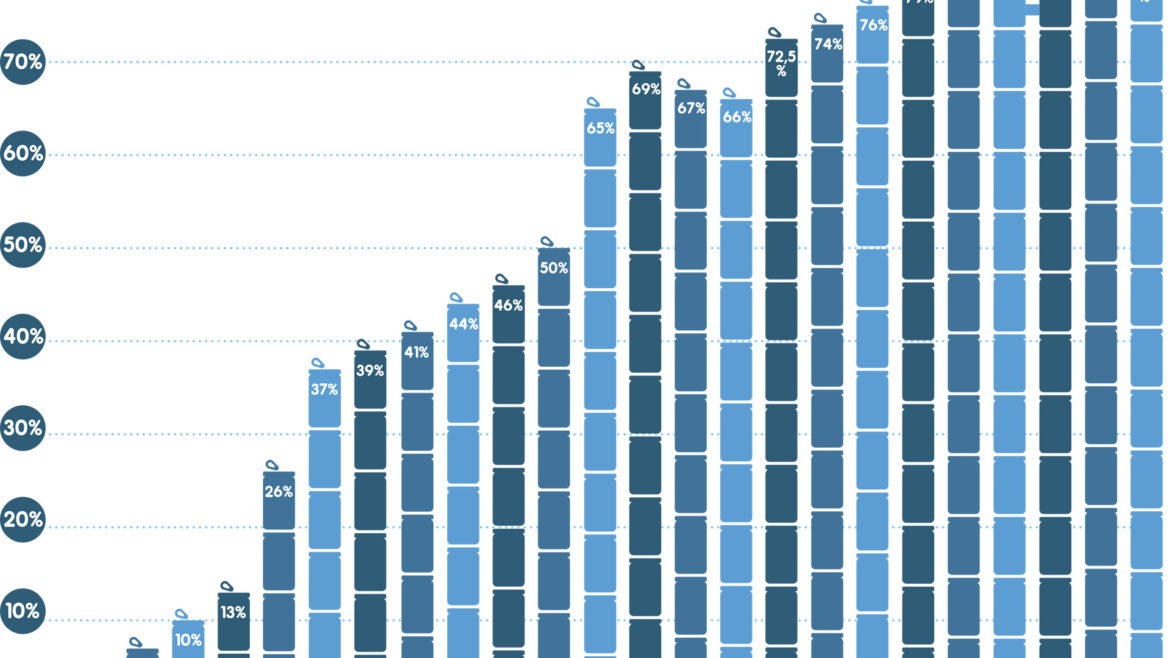
Since 2009, Every Can Counts has worked to increase awareness about recycling aluminium drink cans with the vision of recycling 100% of the cans consumed in Europe. And although 74,5% of the drink cans were recycled in Europe in 2017, the poll showed two-thirds of respondents think the aluminium can recycling rate is under 50%. This paradox shows that there is still more work to do in terms of consumer knowledge. Awareness about aluminium’s circular properties is a similar case, with only 55% of respondents correctly identifying aluminium as an infinitely recyclable packaging material.

Moreover, when it comes to what happens to recyclables after leaving the home or office, where they are going to be recycled, what happens to the materials after recycling, and especially how much of  the waste gets actually recycled, respondents admitted they are not well informed and would like to know more.

Recyclability also plays an important role in consumer behaviour. Most respondents (54%) said they prefer to use drink cans because they are easily recyclable. This reason was also the strongest motivation when compared with others such as light packaging, easy to transport, open on the go, and easy storage. It’s thus not surprising that a total of 94% said companies should use packaging that is infinitely recyclable.

Finally, people expressed favourable views towards incentives to reducing the environmental footprint of drinks packaging such as a reward system for recycling, improved labelling information, better signage, and harmonised rules and sorting instructions at least at country level.

The survey polled a sample size of 13,793 people older than 16 balanced for age and gender in 14 countries (Belgium, Serbia, Austria, Hungary, Greece, Romania, Poland, Czech Republic, Ireland, Netherlands, United Kingdom, Spain, Italy, France) from August 5 to September 14, 2020.

To find out more about survey results, see:

ECC SURVEY RESULTS

ECC FULL REPORT SURVEY

COVID Pandemic Sparks Urgency as 86% Say More Needs to be Done for the Environment

COVID Pandemic Sparks Urgency as 86% Say More Needs to be Done for the Environment 2560 1709 JakubCZ

More than 90% of Europeans declare they would like to do more for recycling

A vast majority of Europeans said it is more important than ever to take care of our environment and recycle after COVID-19 while a staggering 91% said they would like to do more, according to a survey performed in fourteen European countries by the LUCID polling agency in association with the Every Can Counts initiative that aims to raise awareness about the advantages of recycling aluminium drink cans.

Many proclaimed the world would be different after the coronavirus pandemic, and the results of this poll are a sign that is coming true with a growing urgency about caring for the planet.

“The findings show there is a growing awareness about the need to recycle as much waste as possible, and the COVID-19 pandemic only accelerated that process. People realise how pressing this problem is and are willing to work towards establishing a true circular economy,” Every Can Counts Europe Director David Van Heuverswyn said.

Moreover, a total of 52% of respondents would not put the economy over the environment, despite the economic slowdown in the wake of the COVID-19 pandemic. Two out of three said recycling is an obligation for all and that there is an urgent need to tackle the problem. More than three quarters of respondents always or often recycle all types of materials while 76% of people often or always recycle their aluminium drink cans, the most recycled beverage packaging globally.

Since 2009, Every Can Counts has worked to increase awareness about recycling aluminium drink cans with the vision of recycling 100% of the cans consumed in Europe. In 2017, the drink can recycling rate stood at 74.5%, but the poll showed that 90% of respondents believe their country should recycle more if not all drink cans, and a full 4 out of 10 would like to see 100% of them getting recycled. 

The survey polled a sample size of 13,793 people older than 16 balanced for age and gender in 14 countries where Every Can Counts has a local initiative (Belgium, Serbia, Austria, Hungary, Greece, Romania, Poland, Czech Republic, Ireland, Netherlands, United Kingdom, Spain, Italy, France) from August 5 to September 14, 2020.

To find out more about survey results, see: ECC – REPORT – SURVEY

Every can counts

The ReSTART Campaign Encourages People to Change Their Habits

The ReSTART Campaign Encourages People to Change Their Habits 1444 964 Administrador

With large-scale events on hold for the near future, Every Can Counts encourages people to continue their recycling efforts at home with the Recycling Challenge, a viral initiative that has taken off in Spain and is now being launched across Europe. How can you take part? It’s easier than you think!

The Recycling Challenge wants to breathe life into a new beginning – because that’s how we see this difficult time and the challenges it brings. The Recycling Challenge provides people with a creative way to show off their coordination and innovative spirit while doing their part for the environment and recycling their cans. We know that every good intention needs a bit of a push to get started, ideally in a way that’s fun and cool, so we want to spotlight this drive.

Simply enough, Every Can Counts is challenging people to film themselves placing an aluminium drink can in a recycling bin in the most creative way possible. Does that sound easy? Think of your own creative way to get that can into the bin. If you’re lacking inspiration, check out Instagram, but there’s no limit to what you can create. All posts with the hashtag #RecyclingChallenge will be featured on Every Can Counts channels.

This is all part of the initiative’s ReSTART campaign that encourages people to change their habits in the wake of the COVID-19 pandemic. The initiative is separated into several parts that are the steps symbolizing working to a better future and combining all our individual efforts with the greater goal of a circular economy.

Individual Steps:

The #ReSTART manifesto: R (e) THINK – R (e) COVER – R (e) CYCLE – R (e) INVENT – R (e) START

These steps are represented using special creative motifs on the national Every Can Counts social media accounts. The #ReSTART campaign wants to make people think while showing that we can all take something positive from this special time. It’s just a matter of finding ways to our individual actions to reinvent ourselves as human beings. If we do that, we will wake up in a smarter, cleaner, and healthier world; a circular world.

Aluminium Cans Are the Most Recycled Packaging in Poland

Aluminium Cans Are the Most Recycled Packaging in Poland 1911 2560 Administrador

According to the latest data (Warsaw, May 11, 2020), the aluminium drink can recycling rate was over 80.5% in Poland during 2018. It’s another year where the level exceeded 80%, well-beyond the EU requirement of 51%. This exceptional and stable result makes aluminium packaging the leader in terms of recycling, which was achieved thanks to an effectively functioning commercial collection system, and the new local regulations on extended producer responsibility should take into account well-functioning and tested solutions developed by the aluminium industry.

The aluminium beverage can is currently the most recycled packaging waste in Poland. This achievement was possible thanks to a nationwide network of collection points and scrap yards buying beverage cans from consumers. It’s a self-financing system that is economically and environmentally effective. The aluminium industry’s involvement in the recycling process has also significantly contributed to this great result. Put simply, domestic can-makers in cooperation with aluminium suppliers are successfully closing the recycling loop.

In accordance with EU regulations, an entrepreneur introducing packaging to the market covers the costs of collecting, transporting, cleaning, and, in extreme cases, finance their recycling. Aluminium packaging, which is the most valuable secondary raw material in municipal waste, does not generate additional costs and there is no need to pay extra for its processing. In the case of aluminium, the value of the raw material collected covers all related costs. The special advantage of this metal should be taken into account when developing Polish Extended Producer Responsibility (EPR) regulations the government is currently producing.

“We are aware that it is necessary to introduce new solutions that will ensure compliance with ambitious EU recycling levels. At the same time, as an industry that has been working hard for years to achieve the current levels of aluminium can recycling, we expect the new regulations to incorporate the system that is already effective today at all legal, operational, and financial levels,” said Bartomiej Wojdyło, acting sustainability director of CANPACK Group and RECAL Foundation board member.

One of the solutions discussed is the introduction of a deposit on beverage packaging, which can contribute to raising the overall levels of packaging waste recycling. When designing the deposit system for beverage packaging, it should be remembered that surpluses generated from the sale of valuable raw materials cannot financially support other packaging. The introduction of a deposit system for all packaging in Poland that is being considered today should first apply to packaging that is difficult to separate from the household waste stream, because it is often the only way to achieve the required recovery levels.

“The RECAL Foundation, representing the aluminium packaging recovery industry, is of the opinion that the DRS should first be introduced for packaging where it is the shortest and perhaps the only way to achieve the required levels of recovery,” – President of the RECAL Foundation Board Jacek Wodzisławiski said. “The system already being implemented should assume the possibility of future extensions to other packaging and be treated as a supplement to the Extended Producer Responsibility system,” Jacek Wodzisławski added. Fees incurred by producers should cover the costs of processing a type of packaging so that the system is effective. Lower costs will increase the amount of mono-material packaging or those easy to process, such as aluminium beverage cans. Such a solution will significantly increase the importance of environmentally-friendly packaging for subsequent processing.

UK Drink Can Recycling Rate Increases to 76%

UK Drink Can Recycling Rate Increases to 76% 1423 800 Administrador

Recycling a drink can is an opportunity to do infinite good, and more and more people are choosing to keep the cycle going – the UK drink can recycling rate reached a new high of 76% in 2019! 

Click here to read the full news release by Alupro, the Aluminium Packaging Recycling Organisation, announcing the 2019 UK aluminium packaging recycling rates.

Chris Latham-Warde, Every Can Counts UK Programme Manager, said: “Our vision is for every can in the UK to be recycled, so it’s really encouraging to see that we’re making progress in the right direction.  In the past 5 years, the drink can recycling rate has increased by an impressive 16% in the UK.  This is testament to the ongoing improvements being made by the recycling industry and the considered actions being taken by consumers to ensure their empty drink cans are placed in the right bin.”

A survey of 10,000 people conducted by Every Can Counts across 30 sporting and music events in the UK last year suggests where attention is needed in order to further close the gap to a 100% recycling rate.  The survey results revealed that the majority of consumers are keen for more can recycling bins in public spaces, with 60 per cent of respondents calling for more facilities on UK streets, 56 per cent calling for more facilities at beaches and 51 per cent asking for more provision at music and sporting events.

Every Can Counts continues its work with partners across the UK to improve ‘on the go’ can recycling facilities. These projects form a fundamental part of the programme’s mission to empower and inspire consumer behaviour change.  While activities at events and festivals have been put on hold this year due to the coronavirus pandemic, the programme has adapted and continues to raise awareness of the many benefits of recycling drink cans through its increased media and digital outreach.  And the team are ready and waiting to take the recycling message back into the physical world when life ‘on the go’ resumes.